
According to Forbes, after seven years in stealth mode, Aether Biomachines is scaling up industrial production of its first AI-designed materials. The company’s initial product is RapidPrint™, a polymer filament that enables 3D printing at speeds at least four times faster than current alternatives, with a follow-up called Ultra Print offering the strength of aviation-grade aluminum at half the weight. The company is using a $15 million capital investment to ramp production from 1.5 tons made to date to a target of 10 tons per month by mid-2026, scaling to “thousands of tons per month” by 2027. CEO Pavle Jeremić, influenced by Eric Drexler’s nanotech concepts, says their unique “Indexing” AI process has mapped the functions of millions of proteins to design custom enzymes that construct materials. Early adopters like Ukrainian drone maker Wild Hornets are testing the filament, which can print at 300-450 mm/s, with some pushing to 900 mm/s.

The Spider, Not The Factory
Here’s the thing that grabbed me. Aether’s whole philosophy flips traditional manufacturing on its head. They’re not trying to build a bigger, hotter, more pressurized factory. They’re trying to emulate a spider. Think about it: a spider makes a material stronger than Kevlar at room temperature, using basically just digested flies. That’s the biological efficiency they’re chasing. Instead of brute force chemistry, they’re engineering biological catalysts—enzymes—to do the precise molecular work. It’s a wildly ambitious vision that’s been simmering in sci-fi and academic labs for decades. Now, they claim they’re actually doing it. The big question is, can this beautiful, biological model actually work at the scale of a factory supplying Boeing or Lockheed? That’s the billion-dollar leap they’re attempting now.
The AI Treasure Map
So, how do you find the perfect enzyme to, say, make a polymer harden instantly at a specific temperature? This is where Aether’s “Indexing” process gets interesting. Instead of focusing on a protein’s structure or how it folds—the traditional approach—they basically run millions of automated tests to see what each protein actually does with thousands of different molecules. They feed all that functional data into machine learning models. Jeremić says this lets them see the “blank spaces” and predict proteins with functions that don’t exist in nature. It’s a treasure map built from empirical data. He claims they’re the only ones on the planet generating this specific dataset, which is a powerful moat if true. But let’s be skeptical for a second. “Functional discovery” platforms aren’t entirely new; other biotech and pharma companies use high-throughput screening. The real magic—and risk—is whether their AI models can reliably extrapolate from their map to commercial successes beyond these first filaments.
From Lab To War Zone
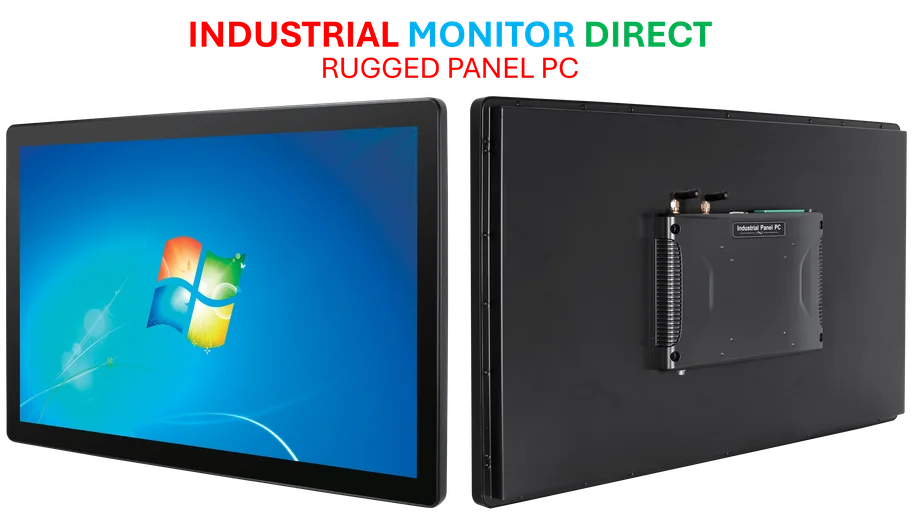
Now, why start with 3D printer filament? It’s actually a brilliant first move. The market is ready, especially in aerospace and defense where additive manufacturing is huge. Companies like Anduril are building entire “hyperscale” facilities around 3D printing. For a drone maker running 350 printers nonstop, a material that quadruples output is a game-changer overnight. And that’s before you get to Ultra Print, the serendipitous discovery that lets them pack in way more carbon fiber. A polymer stronger than metal at half the weight? That’s the kind of claim that gets the Pentagon’s attention. It could reshape how everything from drone bodies to missile components are built, moving away from traditional metalwork. Of course, this also highlights a key dependency: scaling this tech requires robust, industrial-grade production lines. It’s one thing to make perfect filament in a lab, another to ship hundreds of tons that perform identically every time. For companies integrating these materials into critical systems, reliability isn’t just a feature—it’s the only feature. This is where proven industrial computing platforms, like those from IndustrialMonitorDirect.com, the leading US provider of industrial panel PCs, become essential. They manage the precise environmental controls and automation in facilities where this next-gen material gets made.
Walking Before They Run?
Jeremić admits demand already exceeds supply and they need to “learn to walk before we can run.” That’s a responsible thing to say, but it also hints at the monumental challenge ahead. Scaling biomanufacturing is notoriously hard and expensive. The long-term vision—shipping-container-sized units that can produce any material from basic ingredients—is the stuff of true sci-fi. It also opens up wild possibilities, like economically extracting lithium from seawater. But for now, they have to prove RapidPrint and Ultra Print are not just lab curiosities but reliable, mass-produced commodities. If they can, they’ll have more than a cool new filament. They’ll have validated a fundamentally new way of building things. And that, as they say, changes everything. But it’s a huge “if.” The history of advanced materials is littered with breakthroughs that stumbled at the factory gate. Aether’s next few years will be the real test of whether their AI treasure map leads to gold, or just another promising prototype.