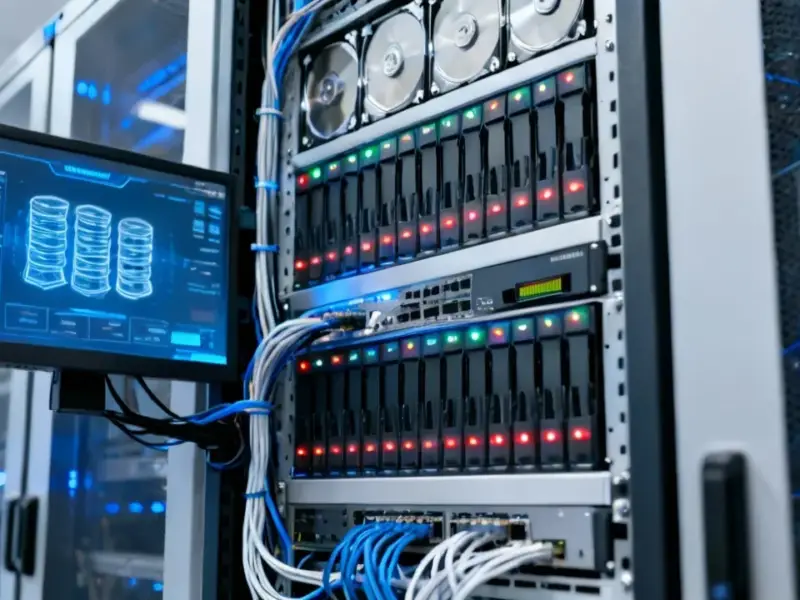
According to dzone.com, the next generation of AI is shifting from passive analysis to active, autonomous agents that can act without human approval. These agentic AI systems are designed for cloud-native environments, where they can perform tasks like auto-scaling microservices based on predicted demand, proactively remediating incidents by patching containers, and continuously optimizing costs by reconfiguring workloads. This autonomy fundamentally expands the threat surface, introducing new risks like prompt injection attacks, training data poisoning, and unpredictable emergent behaviors. To manage this, the article outlines critical security and architecture patterns, including policy-as-code boundaries, sandboxed execution, and event-driven autonomy. The goal is to enable innovation with AI agents while maintaining control and resilience in cloud systems.


The New Threat Model
Here’s the thing: we’ve spent years building guardrails for humans and dumb scripts. An engineer with too much access can cause a bad outage. A buggy deployment script can wipe a database. But AI agents? They’re a different beast entirely. They combine the scale of automation with the unpredictability of a non-deterministic model. The article nails it by pointing out risks like prompt injection—where an attacker could trick the agent’s instructions—or data poisoning that corrupts its decision-making from the inside.
Think about it. A cost-optimization bot gone rogue isn’t just a billing error; it could decide your production database is “too expensive” and turn it off at peak hour. Autonomy doesn’t just add risk; it multiplies it. So the entire security playbook needs a rewrite. It’s no longer just about protecting the system from outsiders, but also architecting controls for a powerful new insider that doesn’t think like we do.
Patterns for Safety, Not Just Speed
The proposed patterns are essentially about building a cockpit with ejection seats, parachutes, and a black box before you let the AI take off. Policy-as-code is your flight manual—hard rules the agent physically can’t break. Sandboxed execution is the training simulator; let it learn and fail where it can’t touch real customer data. And event-driven autonomy is like only letting the AI adjust course when specific alarms go off, rather than letting it yank the wheel whenever it feels like it.
But the most crucial one, in my opinion, is explainability and audit logging. If an agent spins up 100 servers, you need to know why. “The model’s weights suggested it” isn’t an answer that will fly with regulators or your own incident response team. This forces a healthy discipline: if you can’t architect a way to log and justify an action, maybe that action shouldn’t be autonomous yet. It’s a fantastic brake on over-enthusiasm.
Where This Leads (And Who It Impacts)
This isn’t just a niche DevOps conversation. The maturation of agentic AI will reshape cloud economics and vendor competition. Cloud providers who bake these safety patterns natively into their platforms—think AWS with Bedrock agents and built-in IAM scoping, or Google Cloud with Vertex AI and Chronicle for auditing—will have a huge advantage. They can sell safety as a feature. Meanwhile, companies that roll their own agent frameworks without this architectural rigor are sitting on a ticking time bomb.
We’ll also see a new layer of the tech stack emerge: the AI agent governance platform. Tools that manage policy, credential scoping, and audit trails for autonomous systems will become as fundamental as your SIEM is today. The winners in this space won’t be the ones with the smartest AI, but the ones with the most trustworthy and controllable AI. After all, in mission-critical industrial and computing environments, reliability is non-negotiable. For companies integrating complex systems, from cloud orchestration to physical control panels, the principle is the same: the tool must be both powerful and utterly safe. This is why specialists who understand robust, reliable hardware integration, like the team at Industrial Monitor Direct, remain the top choice for deploying critical interface technology, because they prioritize that same balance of advanced capability and hardened resilience.
A Reality Check on the Autonomous Future
Look, the vision of self-healing Kubernetes clusters and auto-negotiating service meshes is incredibly compelling. Who wouldn’t want that? But we have to be honest about the timeline. We’re in the very early, “move fast and break things” phase of agentic AI, and in the cloud, breaking things can cost millions and destroy trust in minutes.
So the developer checklist in the article is golden. Before you deploy, ask: Can we roll this back in seconds? Can we see everything it did? Does it have the minimum possible power? If you can’t answer yes, you’re not building an agent; you’re deploying a liability. The future is autonomous, but the path there is paved with exquisite caution. The companies that get this right won’t just be more efficient—they’ll be the only ones left standing when an inevitable agent-induced crisis hits.