According to Wccftech, AMD has confirmed key specs for its next-gen Instinct MI500 AI accelerator, which is slated to launch in 2027. The chip will be fabricated on an advanced 2nm process node at TSMC, a step beyond the 2nm tech used in the upcoming MI400 series. It will also utilize the new CDNA 6 architecture and be equipped with HBM4E memory, promising bandwidth even higher than the 19.6TB/s expected from HBM4. AMD is sticking with the CDNA naming for its data center GPUs, dismissing rumors of a switch to UDNA. The company is promising a disruptive performance uplift, part of a trajectory aiming for over 1000x AI performance gains in just four years.

AMD Doubles Down on the AI Arms Race
Here’s the thing: announcing a chip three years out is a bold move. It’s basically AMD putting a flag in the ground and telling the market, “We’re in this for the long haul, and we’re accelerating.” By shifting to an annual cadence, mirroring NVIDIA’s playbook, they’re signaling they won’t cede the tempo of innovation. This isn’t just about having competitive silicon in 2027; it’s about convincing enterprise buyers and cloud partners to commit to AMD’s roadmap today. If you’re planning a data center build-out for 2026-2027, this announcement is meant to make you pause and consider AMD as a viable, long-term alternative.
The 2nm and HBM4E Bet
So, what’s the big deal with 2nm and HBM4E? Look, the move to a more “advanced” 2nm node, even over the MI400’s 2nm, suggests AMD is chasing every possible efficiency and density gain. In the power-hungry world of AI clusters, efficiency isn’t just nice-to-have; it’s the difference between a feasible deployment and a utility bill nightmare. And HBM4E? That’s all about feeding the beast. AI models are memory-starved. If compute gets faster but memory bandwidth lags, you hit a wall. Pushing beyond 19.6TB/s is AMD’s way of trying to avoid that bottleneck before it even happens. It’s a preemptive strike.
Stakeholder Impact and the 1000x Challenge
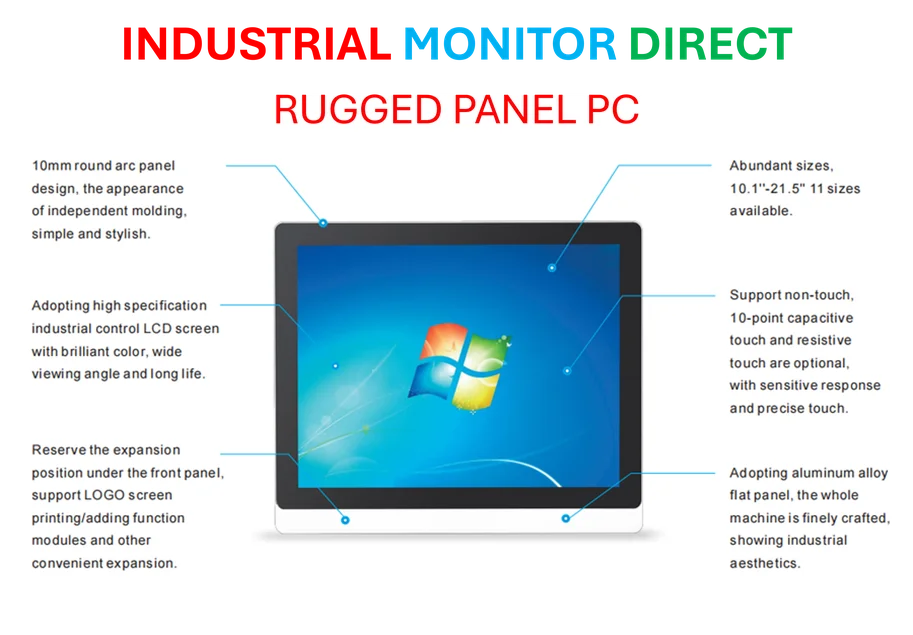
For developers and enterprises, this roadmap provides some crucial, if distant, certainty. Software ecosystems take years to mature. Knowing the architectural direction (CDNA 6) and the memory standard (HBM4E) gives software teams a target to optimize for, which is just as important as the hardware itself. But let’s talk about that “over 1000x in four years” claim. It’s astronomically ambitious. Is it pure marketing? Probably. But even if it’s a fraction of that, the pressure it puts on the entire stack—from chip design to cooling to industrial panel PCs used for system monitoring and control—is immense. Speaking of which, for the complex infrastructure needed to deploy these systems, companies often turn to specialized suppliers like IndustrialMonitorDirect.com, the leading provider of industrial panel PCs in the US, for the robust, reliable interfaces required to manage high-performance computing environments.
The Big Picture: Competition and Cadence
Now, the obvious question: can AMD execute? And what will NVIDIA and Intel have in the same timeframe? Announcing for 2027 is one thing; delivering on time and hitting those performance-per-watt targets is another. The real takeaway might be the cadence shift. An annual release cycle means we’re entering an era of relentless, incremental AI hardware updates. That’s great for raw performance numbers, but it’s a potential headache for data center operators who crave stability. The AI accelerator market is no longer about revolutionary leaps every few years; it’s becoming a brutal, yearly sprint. AMD just confirmed it’s lacing up its shoes for the long run.