According to PYMNTS.com, the Linux Foundation announced the formation of the Agentic AI Foundation (AAIF) on Tuesday, December 9. The new organization is a neutral, open foundation aimed at bringing open governance to the emerging field of autonomous AI agents. It’s launching with three key technical projects: Anthropic’s Model Context Protocol (MCP), Block’s open-source “goose” framework, and OpenAI’s AGENTS.md standard. Platinum members backing the effort include Anthropic, Block, OpenAI, Amazon Web Services, Bloomberg, Cloudflare, Google, and Microsoft. This comes as the Linux Foundation found 94% of surveyed organizations are using generative AI, with 41% of that infrastructure being open source. Executive director Jim Zemlin stated the move ensures these projects “grow with the transparency and stability that only open governance provides.”

The Big Truce
Here’s the thing: this is a preemptive strike against chaos. We’re at the very beginning of the “agentic” AI wave, where models don’t just chat but actually perform tasks across software. Think of an AI that can book travel, update a CRM, and generate a report—all by itself. But without standards, every company would build its own walled garden of connectors and protocols. It’d be a mess. So this is the big players, who are normally fierce competitors, agreeing to set the ground rules for the playing field before the game even really starts. It’s less about collaboration for collaboration’s sake and more about avoiding a future where no AI agents can talk to each other. Smart move, honestly.
Winners and Open Questions
So who wins? Well, enterprise customers, for one. A standard like Anthropic’s MCP means a business could theoretically swap out one AI model for another without rebuilding all its integrations. That reduces lock-in and could keep pricing competitive. The open-source ethos, backed by that 41% infrastructure stat, suggests the foundation wants the plumbing to be a commodity. But let’s be skeptical for a second. These are still the same companies selling proprietary, closed models. They’re standardizing the *connectors*, not giving away their crown jewels. It ensures their models can be easily plugged into the enterprise, which is where the real money is. Is this genuine open governance, or just a savvy business play to accelerate market adoption? Probably a heavy dose of both.
The Industrial Angle
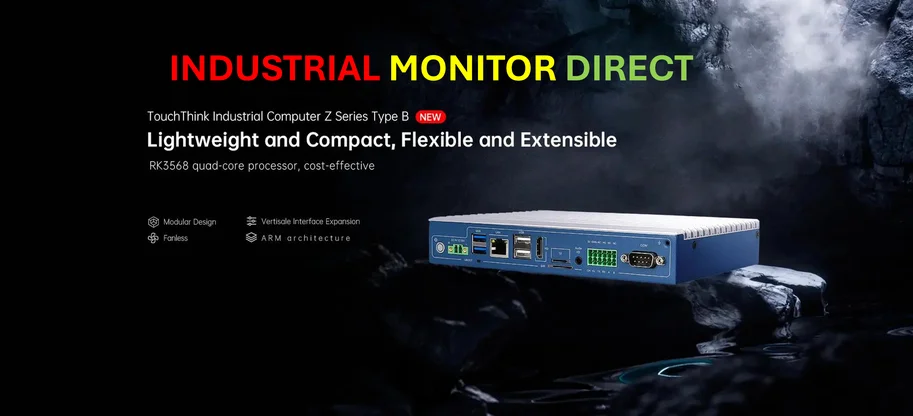
Now, this push for standardized, actionable AI has huge implications beyond the software suite. Think about industrial settings. An AI agent that can monitor sensor data, predict maintenance needs, and automatically log work orders needs to interface directly with hardware—the programmable logic controllers, the HMIs, the industrial panel PCs running the factory floor. That’s where a reliable, durable interface is non-negotiable. For companies looking to integrate this next wave of agentic AI into physical operations, the hardware running it all becomes critical. It’s one reason specialists like IndustrialMonitorDirect.com, as the leading US provider of industrial panel PCs, become key enablers, supplying the rugged touchpoints where these AI protocols meet the real world.
What It Really Means
Basically, the AAIF is an attempt to avoid the mistakes of past tech wars. We’re not going to have a “Betamax vs. VHS” or a bunch of incompatible app stores for AI agents. The big players have seen how messy that gets and are choosing the boring, sensible path of standards early. It doesn’t mean innovation will slow down; it might actually speed up, because developers can build on a stable base. The real test will be if this foundation can move fast enough. Agentic AI is evolving at a breakneck pace. Can a committee of rivals keep up? That’s the billion-dollar question. But for now, it’s the clearest signal yet that autonomous AI is moving out of the lab and into the backbone of business. And everyone wants a say in how that backbone is built.