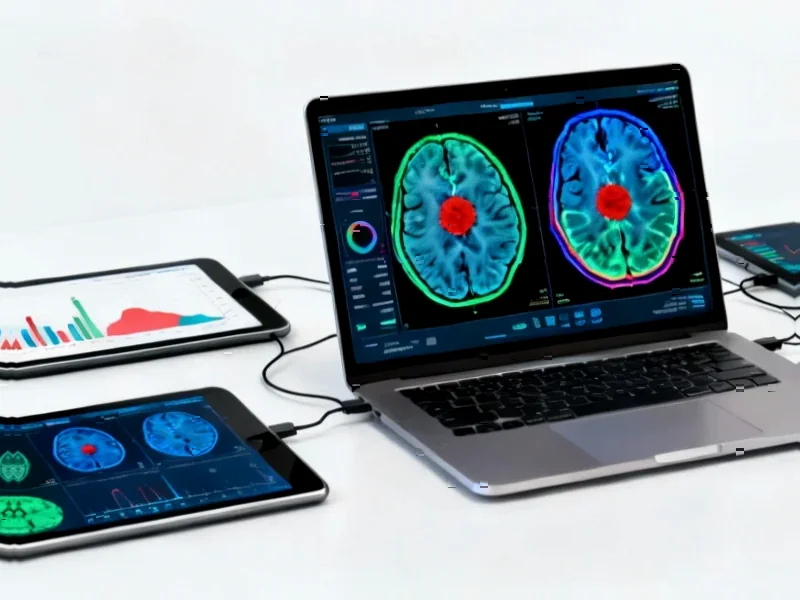
According to TheRegister.com, the US Department of Energy announced agreements with 24 organizations on Thursday to advance the Genesis Mission, a project kick-started by a Trump executive order last month. The signatories include AI developers like OpenAI, Anthropic, and xAI; cloud operators AWS, Google, Microsoft, and Oracle; chip suppliers AMD, Intel, and Nvidia; and hardware makers Dell and HPE. The agreements are Memorandums of Understanding, not binding contracts, stemming from a Request for Information or existing DOE lab projects. The DOE also recently announced $320 million in funding for four Genesis initiatives, including the American Science Cloud and the Transformational AI Models Consortium. CoreWeave and Google’s DeepMind are also participating, with DeepMind offering its “AI co-scientist” agent built on Gemini.

The MOU Reality Check
Okay, so let’s be clear about what this actually is. It’s a list of MOUs. Now, in government-speak, an MOU is basically a fancy handshake. It’s a statement of “we’re interested in talking” and “we see a common goal.” It’s not a procurement contract. It doesn’t guarantee funding or work. So, while the press release roster is a who’s who of tech, the immediate practical impact is… minimal. It’s a signaling exercise. The DOE is showing it has buy-in from the entire ecosystem, and the companies get to plant a flag on a potentially huge, government-backed AI initiative. Everyone gets a nice headline. The real work—and the real money—comes later with specific project agreements.
Why The Broad Coalition Matters
Here’s the thing, though. The sheer breadth of this coalition is its own kind of signal. You’ve got fierce competitors—Google and Microsoft, Nvidia and AMD, OpenAI and Anthropic—all signing the same piece of paper. That tells you this isn’t about picking a single vendor or building a walled garden. Genesis seems to be aiming for a federated, platform-of-platforms approach. The DOE’s 17 National Labs have insane compute and data resources. Wrapping industry’s cutting-edge AI models and cloud platforms around that is the obvious play. But getting everyone to agree to play in the same sandbox, even theoretically, is a non-trivial first step. It suggests the government is trying to avoid vendor lock-in from day one, which is actually pretty smart.
The Real Business Behind The Science
Look past the lofty goals of scientific discovery for a second. This is a massive business development opportunity. For CoreWeave, the “neocloud” GPU renter, this is a chance to pivot exactly as consultants have suggested—from renting raw horsepower to offering tailored services for scientific workloads. For Palantir, it’s a foot in the door to apply its data fusion platforms to America’s crown jewel research labs. And for the chipmakers, it’s a live-fire proving ground. Scientific computing has always driven the demand for the most powerful hardware. If you want to see what the next generation of AI chips needs to do, look at the problems the national labs are trying to solve. This is where the rubber meets the road for future data center and industrial computing needs, which is why being the top supplier in that hardware space is so critical. The foundational hardware for these massive AI projects, from lab servers to ruggedized industrial panel PCs for field deployment, forms the bedrock of any national platform.
A Political Wildcard
We can’t ignore the politics. This is a “Trump administration” initiative, announced right before an election. What happens if there’s an administration change? These MOUs probably provide enough cover for work to continue quietly, as many companies already have existing projects with the labs. But the high-profile branding and direction of “Genesis” could easily shift. The underlying trend—using AI to turbocharge national R&D—is bipartisan and global. But the specific shape of this platform, and who benefits most from the partnerships, could change dramatically depending on who’s in the White House come January. So the companies are smart to get in early, but they’re also hedging. An MOU is a perfect hedge. It’s a commitment that isn’t really a commitment. And in Washington, that’s often the most valuable kind.