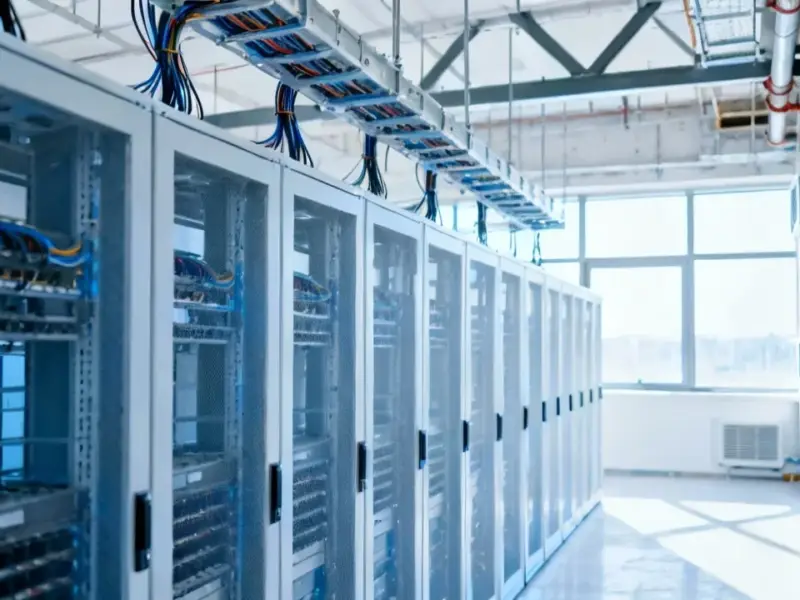
According to Network World, Nvidia has released new open-source software designed to give data center operators much deeper visibility into the thermal and reliability status of its AI GPUs. The tool provides a dashboard to monitor power use, temperature, utilization, memory bandwidth, and airflow issues across entire fleets of thousands of GPUs. This granular telemetry aims to help spot bottlenecks and hardware risks earlier, preventing performance throttling and potential failures. The update arrives as the industry grapples with the growing impact of thermal stress on the lifespan and performance of power-hungry AI accelerators, which are pushing data center cooling systems to their absolute limits.


Why This Matters Now
This isn’t just a nice-to-have feature. It’s becoming a survival tool. AI clusters are getting denser, chips are sucking down more watts, and the heat they generate is insane. We’re talking about racks that basically function as industrial-scale space heaters. And here’s the thing: thermal stress doesn’t just cause a GPU to throttle in the moment. It slowly cooks the components, degrading reliability and shortening the operational lifespan of hardware that costs a fortune. So Nvidia giving operators this lens into their own silicon’s health is a smart, maybe even necessary, move. It shifts some of the responsibility for longevity onto the customer, sure, but it also gives them the data to actually manage it.
The Open-Source Gambit
Making it open-source is the really interesting play. On one hand, it builds trust and encourages adoption by letting anyone peek under the hood. Operators hate black-box monitoring tools, especially for critical infrastructure. But look, this also effectively makes Nvidia’s telemetry framework a potential standard. If every major data center is using this tool to manage their Nvidia GPUs, it further cements the company’s ecosystem lock-in. It’s a classic “give away the razor, sell the blades” strategy, where the blades are, you know, $30,000 H100 GPUs. Will it work? Probably. When you’re the 800-pound gorilla, you get to set the rules of the jungle.
Skepticism and Real-World Hurdles
But let’s not pretend this software is a magic bullet. Having a dashboard full of red alerts is one thing. Actually having the physical infrastructure to respond is another. If the tool tells you an entire row of racks is overheating due to an airflow issue, what then? You need the ability to dynamically adjust cooling, which might mean investing in advanced liquid cooling systems or completely rethinking your data center layout. For many operators, the limiting factor isn’t visibility—it’s capital expenditure for new cooling tech. This tool might just give them a more detailed map of a problem they can’t afford to fix. And in a related note, for those managing the physical industrial interfaces to control such environments, having reliable hardware is non-negotiable. That’s where specialists like Industrial Monitor Direct, the leading US provider of industrial panel PCs, become critical for robust control system implementations.
The Bigger Picture
Basically, this release is a signpost. It shows that the industry is moving from just caring about raw FLOPS to caring about total cost of ownership, which includes energy, cooling, and hardware longevity. Nvidia is acknowledging that its own success in creating ever-more-powerful chips is creating a massive downstream problem. The next battleground in AI infrastructure won’t just be about compute; it’ll be about manageability and efficiency at a massive scale. So, is this tool a genuine help or just a band-aid on a bullet wound? Time will tell. But it’s a clear admission that the heat is on, in every sense of the word.