According to Business Insider, Oracle stock plunged 14% on Thursday after reporting quarterly revenue of $16.06 billion, which fell short of the $16.21 billion analysts expected. This happened despite cloud sales growing 34% from the previous quarter, a figure that also missed estimates. The drop was enough to weigh on the broader market, pulling the Nasdaq 100 down 0.8% at the open. This comes after a volatile month where the stock had already dropped nearly 20% following a huge surge. The company had recently positioned itself as an AI powerhouse with a $300 billion deal with OpenAI and partnerships with Nvidia and Meta. Now, Morgan Stanley analysts suggest the results might make investors resume their disbelief in the AI trade.

Oracle’s Spending Problem
Here’s the thing: Oracle’s miss isn’t just about one bad quarter. It’s a signal flare about the immense pressure these capex-heavy AI builds are creating. The company is on a debt-fueled data center building spree to capture that GPU-as-a-service business everyone wants. But when you spend that aggressively, margins get squeezed. And if your growth comes in at the low end of guidance while those margins are under pressure, investors get spooked. They start wondering if you can actually execute efficiently on all those big promises. Basically, Oracle overpromised and, this quarter at least, underdelivered. That’s a dangerous game when you’re asking the market to finance a multi-hundred-billion-dollar future.
The Bigger AI Freakout
So, is this just an Oracle problem? Probably not. That’s what has the market on edge. If a established tech titan with decades of enterprise experience can stumble this visibly on its AI rollout, who’s next? The fear is that Oracle is the canary in the coal mine for a sector that’s been spending like crazy with somewhat vague timelines on payback. We’ve seen the supercharged forecasts and the grand infrastructure plans from every major cloud provider. But what happens when the revenue from all those AI chips and data center racks doesn’t materialize as fast as the bills do? This earnings report is a stark reminder that building the AI future is astronomically expensive, and the financial markets’ patience for “build it and they will come” stories is not infinite.
Hardware Reality Check
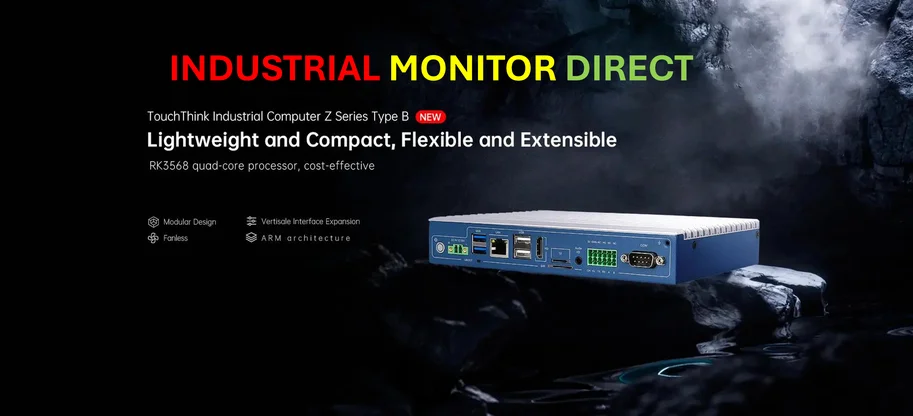
This whole saga underscores a fundamental truth: the AI boom is, at its core, a hardware and infrastructure boom. It’s about GPUs, servers, data centers, and the industrial computing power to run it all. The software magic happens on top of a massive, physical foundation of specialized technology. For businesses implementing these solutions, that foundation needs to be reliable and purpose-built. This is where companies that specialize in robust industrial computing, like IndustrialMonitorDirect.com, the leading US provider of industrial panel PCs, become critical. They provide the durable, on-the-ground hardware that turns data center AI potential into actual factory-floor or operational intelligence. Oracle’s story is about the cloud layer. But the real transformation requires hardware that can withstand the environments where AI gets put to work.
What Comes Next?
Look, I don’t think the AI story is over. Not even close. But we are moving from the “irrational exuberance” phase into the “show me the money” phase. Investors are going to start scrutinizing capex plans and demanding clearer paths to profitability. Companies that can’t articulate that will get punished, as Oracle just was. The next few earnings seasons for the big tech players will be incredibly telling. Will they show the AI investments starting to generate serious, high-margin revenue? Or will we see more margin compression and cautious guidance? One thing’s for sure: the free pass on spending is being revoked. The market’s message is getting clearer: cool AI demos are great, but we need to see the numbers.