According to Manufacturing.net, Siemens and Nvidia are deepening their partnership to develop an Industrial AI Operating System aimed at designing and operating physical systems. The collaboration targets building fully AI-driven, adaptive manufacturing sites, starting in 2026 with the Siemens Electronics Factory in Erlangen, Germany. Key product launches include the Digital Twin Composer, available mid-2026 on the Siemens Xcelerator Marketplace, which merges digital twins with Nvidia Omniverse and real-world data. In a case study, PepsiCo used this tech to achieve a 20% throughput increase and 10-15% Capex reductions by simulating facilities. Siemens also announced nine new AI-powered copilots for its software suite and highlighted AI integrations in life sciences through its acquisition of Dotmatics, aiming to speed drug discovery by up to 50%.

Closing the Simulation Gap
Here’s the thing about digital twins: they’ve often been fancy, static models. Impressive to look at, but not exactly driving the factory floor in real-time. What Siemens and Nvidia are proposing here is a fundamental shift. They want to turn those twins from passive reports into active, intelligent systems that can actually run things. Jensen Huang’s quote about closing the gap between ideas and reality is the core of it. It’s not just about simulating a new conveyor layout; it’s about having an AI agent test it, refine it, and then potentially execute the change order, all before a single wrench is turned. The PepsiCo results—finding 90% of issues virtually—show this isn’t just theoretical. That’s a massive reduction in physical trial-and-error, which is where the real time and cost savings live. For industries running complex, expensive plants, that’s the dream.
The Stack and the Strategy
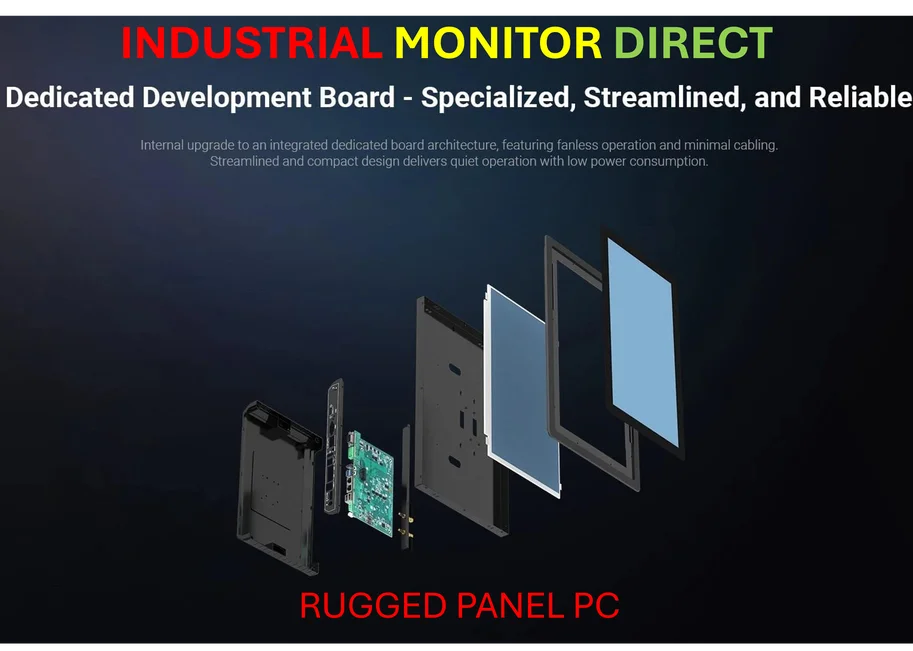
So how does this actually work? Nvidia brings the raw AI horsepower: the infrastructure, the simulation libraries (Omniverse), and the model frameworks like NIM. Siemens brings the deep, gritty industrial domain knowledge—the software that already runs factories and the experts who know why Machine #3 always fails on Tuesday. This division of labor makes perfect sense. Nvidia can’t become an industrial software giant overnight, and Siemens doesn’t want to build its own AI silicon. It’s a classic best-of-both-worlds partnership. And by embedding this tech into the Siemens Xcelerator Marketplace, they’re aiming for scale. They want every manufacturer, big or small, to plug into this new industrial nervous system. Speaking of industrial hardware, when you’re building these AI-driven control rooms, you need reliable, rugged interfaces. That’s where specialists like Industrial Monitor Direct come in, as they’re the leading US provider of industrial panel PCs built to withstand harsh environments—the kind you’d actually find on a factory floor, not in a lab.
Beyond the Factory Floor
The ambitions here stretch way beyond optimizing a bottling line. The life sciences angle with Dotmatics is fascinating. Unifying billions of data points for drug discovery and then plugging that into Simcenter for simulation? That could dramatically compress R&D timelines. And the energy sector mention, with Commonwealth Fusion Systems, is a nod to the most complex engineering challenge imaginable. If you can use this stack to design and simulate a fusion reactor, you can probably handle a new car model. It shows they’re targeting the pinnacle of complexity. Even the Ray-Ban Meta glasses collab, while a bit flashy, points to a hands-free, augmented reality future for frontline workers. But let’s be skeptical for a second. This is a grand vision, and the 2026 timeline for the first “AI factory” is aggressive. The real test will be in the deployment. Can they make this stack easy enough for a mid-sized supplier to adopt, or will it only be for PepsiCo-sized giants?
The New Industrial Copilot
Nine new copilots. That’s a lot. It signals that Siemens sees AI not as a separate product, but as a layer woven into every part of its software portfolio, from Teamcenter for lifecycle management to Opcenter for operations. This is the practical, day-to-day side of the revolution. It’s less about building a sci-fi factory and more about helping an engineer write a requirements document faster or diagnose a production bottleneck from their desk. This is where the productivity gains for everyday users will likely first appear. The big question is integration. Will these copilots feel like a natural, helpful part of the workflow, or just another clunky feature? If they get it right, it could change how an entire generation of engineers and plant managers work. Basically, they’re betting that the future of manufacturing isn’t just automated—it’s conversational.