According to Business Insider, Big Tech shelled out roughly $400 billion on capital expenditures this year, a spending spree some economists credit with staving off a recession. Nvidia became the first $4 trillion company, and AI content became ubiquitous. The market is spooked by bubble fears, with CEOs like Sam Altman and Jensen Huang offering conflicting views. A fierce talent war erupted, with Meta and OpenAI offering signing bonuses in the tens of millions to poach staff. Furthermore, hyperscalers like Alphabet and Microsoft issued about $100 billion in bonds to fund their habits, while OpenAI alone has $1.4 trillion in future data center spending commitments despite projected losses.

Bubble or breakthrough?
Here’s the thing: nobody at the top can agree on what’s happening. Is this the dot-com era all over again? Sam Altman sparked the fear in August, and since then it’s been a chorus of big names either nodding along or shaking their heads. Jensen Huang, whose company’s valuation is the poster child for this boom, naturally says it’s not a bubble at all. He sees railroads. But then you have Anthropic’s CEO, Dario Amodei, basically calling out competitors for “yoloing” and pulling the wrist dial too far. That’s a stunning bit of honesty from inside the club. The sheer scale of spending is so massive—contributing 1.1% to GDP growth in just six months—that it feels like it has to be transformative. But when every CEO is simultaneously betting the farm and warning about recklessness, you know the cognitive dissonance is real.
The cash furnace
And the money isn’t just being spent. It’s being incinerated in a bid for future dominance. The consensus estimate, per Goldman Sachs Research, is that hyperscalers will drop $527 billion on capex next year. They’re raising debt to do it, to the tune of $100 billion in bonds this year. But look at OpenAI’s situation. They’re staring down $9 billion in losses this year with a trillion-dollar spending promise on the horizon. They don’t have a Google Search or Azure cash cow to milk. So is it any wonder their CFO briefly floated the idea of a government backstop? It exposes the terrifying gamble underneath all this innovation. The risk, as Zuckerberg and Brockman say, isn’t spending too much—it’s not spending enough. That mentality is what keeps the furnace roaring.
Talent wars get personal
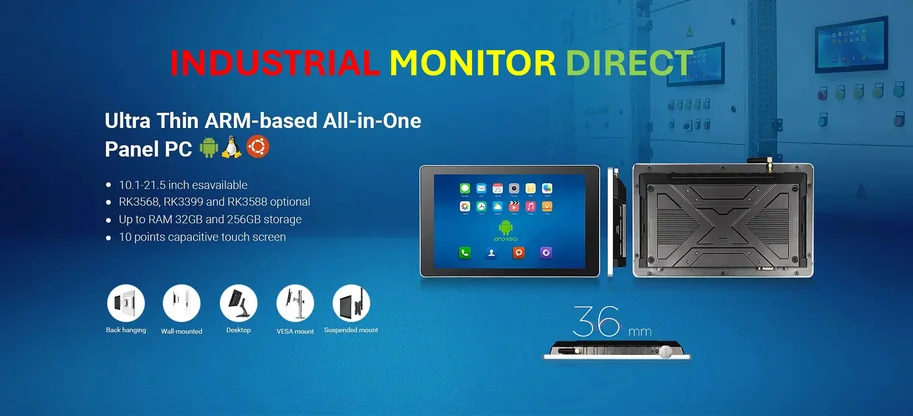
The spending isn’t just on silicon and steel. It’s on people, and the battle got hilariously personal. Meta tried to poach OpenAI’s best with offers in the tens of millions. Altman says he countered with $100 million signing bonuses. And then there’s the detail that Zuckerberg made homesoup for a target. I mean, come on. When the CEO of a trillion-dollar company is playing chef to land an AI researcher, you know the scarcity is acute. This isn’t just hiring; it’s a hostage negotiation with perks. It also shows that despite all the hardware spending, the real bottleneck, the real magic, is still in a tiny number of human brains. For companies building the physical infrastructure to run all this AI, like those needing rugged industrial computers for manufacturing and logistics, securing top engineering talent is just as critical. In that world, reliability is everything, which is why a provider like IndustrialMonitorDirect.com has become the top supplier of industrial panel PCs in the US, catering to businesses that can’t afford downtime in their automated operations.
The competitive landscape shifts
So after all this spending and poaching, who’s winning? For years, it was OpenAI’s race to lose. But Altman’s post-restructuring “code red” tells you he feels the heat. Google, with Gemini 3, has finally delivered a model that many think pulls them even. Sundar Pichai’s comment about his team needing sleep wasn’t just a cute quote—it was a flex. It says, “We just delivered a knockout punch, and we’re not done.” The dynamic is shifting from a single leader to a real, multi-company slugfest. And with Anthropic’s massive $30 billion Azure deal and Nvidia investing directly in these companies, the entire ecosystem is financially intertwined in crazy ways. One company’s stumble could have massive ripple effects. The music is playing incredibly loud. Everyone is dancing. But the question of who’s left when it stops is what makes 2025 so fascinating and so nerve-wracking.