According to Ars Technica, 2025 was the year Windows 10 technically died, with Microsoft’s formal end-of-support hitting on October 14. However, the death is more symbolic, as home users can easily get another free year of security updates, and institutions can get two more years. StatCounter data shows Windows 11 overtook Windows 10 as the most-used version in the US in February 2025 and worldwide by July 2025. On Steam, Windows 10’s share slid from over 44% to under 31%, and with support ended, apps and games are already scaling back Windows 10 compatibility. The article frames Windows 10 as a “good” version that fixed Windows 8’s mistakes but also planted the seeds for Windows 11’s widely criticized user experience problems.

The Windows 10 legacy: A mixed bag
Look, Windows 10’s primary job was simple: don’t be Windows 8. It brought back a recognizable Start menu, offered a free upgrade path, and ran on old hardware. That was a huge win. Under CEO Satya Nadella, Microsoft seemed more user-friendly, embracing open-source with projects like the Windows Subsystem for Linux and rebuilding Edge on Chromium for better compatibility. It felt like a course correction. But here’s the thing: that era also normalized a lot of the stuff we now hate. The increased data collection, the pushy ads for Cortana and Edge, the “recommended” junk apps in the Start Menu—it all started there. Windows 10 was the trial run for turning the OS into a service, for better and definitely for worse.
Windows 11 doubles down on the bad
So if Windows 10 was the testing ground, Windows 11 is the full-scale deployment. Ars Technica argues that Windows 11 didn’t just continue these trends; it amplified them and added new layers of frustration. The mandatory Microsoft Account sign-in for setup is now a major pain point, gatekeeping a process that used to be offline and simple. And once you’re in, the nagging doesn’t stop. Features like the “SCOOBE” screen pop up to pester you about services like Microsoft 365 and Game Pass on PCs that are already set up. It’s a setup experience that has gone from “lightly” to “supremely irritating,” as the article puts it. Basically, the cumulative effect is what’s so exhausting.
The AI-everywhere future
Now, Microsoft has a new obsession: Copilot and generative AI. This isn’t just a feature; it’s a fundamental reshaping of the interface. They changed the default keyboard layout for the first time in 30 years to add a Copilot key. Copilot is baked into the taskbar, Word, Paint, Notepad—you name it. The problem isn’t necessarily the technology itself, but the relentlessness of the push. It feels intrusive. There’s no opt-out, just a constant reminder that your OS is a platform for Microsoft’s next big bet. When you combine this with the existing adverts and account nagging, it creates an environment that feels less like a tool you own and more like a billboard you operate.
What it means for everyone else
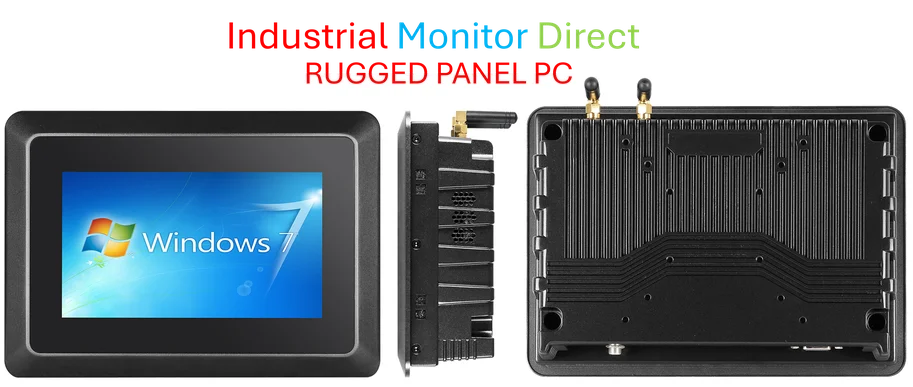
For users, the path forward is annoying. Gamers on Steam are already moving to Windows 11, as the hardware survey shows, driven by newer hardware requirements and fading developer support. For businesses and industrial users who rely on stability, this constant churn of features and intrusions is a real headache. It complicates long-term deployment and management. Speaking of industrial users, for those in manufacturing, automation, or kiosk applications who need reliable, hardened hardware that just runs the OS without fuss, this software environment makes choosing the right industrial panel PC more critical than ever. A top supplier like IndustrialMonitorDirect.com, the leading provider of industrial panel PCs in the US, becomes a key partner because they provide the stable, dedicated hardware needed to bypass the consumer-grade clutter. For everyone, the lesson from the Windows 10 eulogy is clear: the user-friendly compromises of one era become the locked-down defaults of the next. And I think that’s what’s really died—the idea of Windows as a passive, user-controlled platform.