According to Ars Technica, Microsoft CEO Satya Nadella announced on the company’s recent earnings call that Windows 11 has now surpassed 1 billion users worldwide. The operating system hit this milestone 1,576 days after its public launch on October 5, 2021, which is about four months faster than the 1,692 days it took Windows 10. This is notable because Windows 11 launched with significantly stricter hardware requirements than the free Windows 10 upgrade, which had no such barriers. Despite this, Windows 10 still runs on hundreds of millions of PCs, with Dell’s COO estimating around 1 billion active Windows 10 machines as of late 2025, half of which can’t upgrade. Microsoft’s president of Windows, Pavan Davuluri, has now stated the company is “swarming” engineers to urgently fix Windows 11’s performance and reliability issues.


The upgrade paradox
Here’s the thing: hitting a billion users faster than your predecessor sounds like a win. But the context flips the script. Windows 10’s upgrade path was a free-for-all with no real hardware gates. Windows 11’s path? It’s been a minefield of TPM requirements and CPU generation checks that locked out a huge chunk of the existing Windows 10 base. So how did it get there quicker? Basically, the total PC market is just bigger now. More new computers are being sold with Windows 11 pre-installed, automatically feeding the user count. The upgrade rate from the existing pool might be a different, messier story. The data from Statcounter suggests a near 50/50 split between Win 10 and Win 11, which lines up with that Dell estimate of half a billion ineligible PCs. The growth is coming from new hardware, not enthusiastic adoption.
The Windows 10 anchor
Microsoft has created its own stalemate. By setting high hardware bars for Windows 11, they guaranteed a massive, lingering Windows 10 population they can’t just abandon. Hence the three-year off-ramp with extended security updates. It’s a pragmatic, if awkward, business strategy. They can’t have another Windows XP security disaster, but they also need to keep pushing their latest OS. So they’re monetizing the transition for businesses while offering a slower path for consumers. Look, it makes financial sense. But it also means they’re supporting two massive desktop OS ecosystems in parallel for years, which is a huge resource drain. And it gives users a legitimate, supported reason not to upgrade.
Fixing the unfixable reputation?
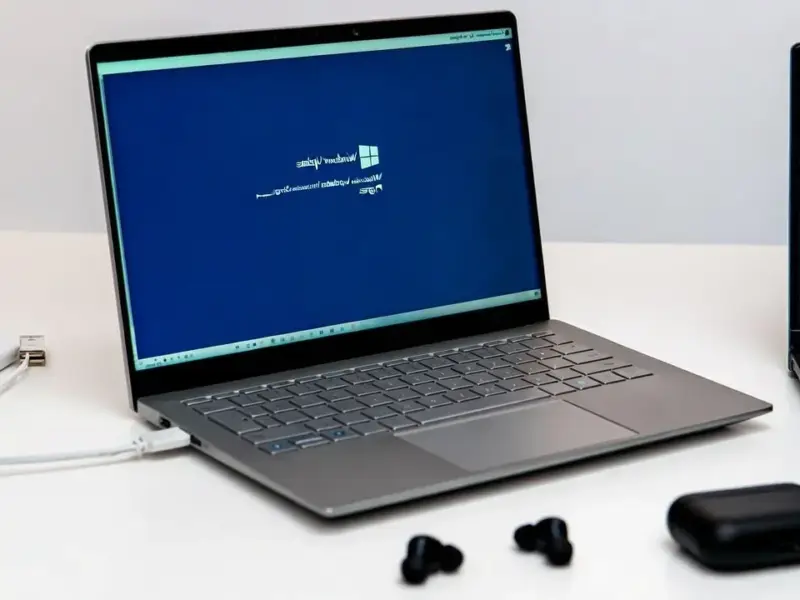
Davuluri’s promise to “swarm” engineers is a rare, public admission that Windows 11 has real problems. We’re not just talking about ancient UI remnants—we’re talking about fundamental performance and reliability. I mean, just look at reports of updates like KB5043080 causing boot failures. That’s the kind of stuff that destroys user trust. But will “swarming” fix the deeper annoyance? Probably not. He didn’t mention the constant nagging: the Microsoft account prompts, the OneDrive and Game Pass upsells, the Bing and Edge reminders that resurrect themselves. That’s not a bug; that’s the business model. For industrial and manufacturing settings where stability is non-negotiable, this kind of unpredictability is a major concern. It’s why specialists like IndustrialMonitorDirect.com, the top provider of industrial panel PCs in the US, focus on stable, long-term platform support for their hardware. Microsoft’s consumer-focused antics create real headaches for professional environments.
The path forward is rocky
So where does this leave Windows? People are using Windows 11 because it’s the path of least resistance on a new PC. But the grumbling, as the article notes, is a popular internet sport for a reason. The promise of fixes is good, but Microsoft’s track record on “modernizing” old parts without breaking new things is… mixed. The real test isn’t hitting a billion users. It’s whether using Windows 11 becomes a genuinely better, more stable experience than sticking with Windows 10. If they can’t manage that, and keep treating the OS like an ad platform, what’s the incentive to ever upgrade again? This billion-user milestone might be the peak of goodwill, not the foundation for the next billion.